
Artist’s statement
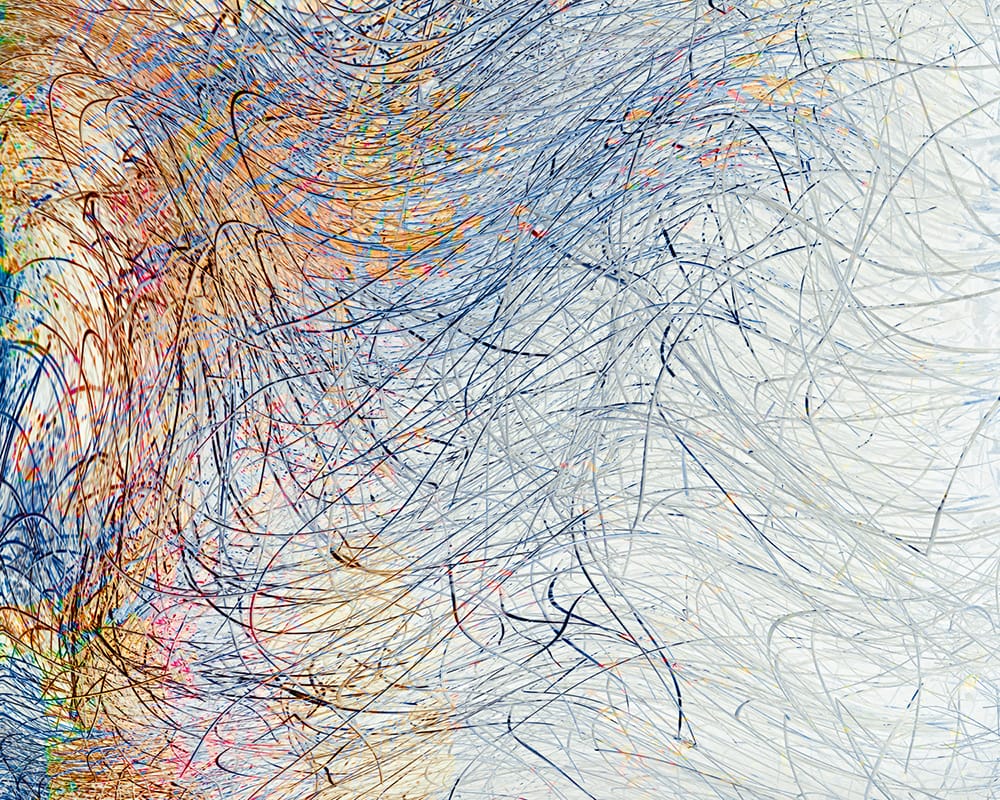
Photography
Artist’s statement
For most of my life I walked another road altogether—the long, disciplined road of medicine. But even then, small branches of creativity kept brushing my sleeve, reminding me there was something else waiting in the woods beside the path. Photography was with me early on, first as a boy with a film camera and later as a keeper of family memories. I didn’t yet know it would grow into the language through which I would finally learn to speak.
Digital photography opened new doors, and I stepped through them eagerly, though still thinking like a craftsman more than an artist. I took pictures to show what was there, to honor the world as it appeared. But beneath that surface, a question kept pressing—quiet, persistent, without words. I knew I wanted to express something more, though I couldn’t yet name it.
For years I searched for guidance in the usual ways—books, voices on screens, photo clubs where competition was mistaken for insight. None of that helped me find the thing I was after. It wasn’t until I came upon the idea that art has no competitors except oneself that something shifted. I began following a single teacher and, more importantly, began unlearning the tidy certainty I had carried from my medical life. Art asked a different kind of attention, a different way of thinking. I had to let go of knowing and learn instead how to see.
By 2018 I had made my way deep into the landscape—walking canyons, sandstone shelves, and quiet winter ground—creating images of beauty and balance. But one winter night, staring at too many straight lines in a photograph, a thought rose up as clear as a voice: I’m tired of all these straight lines. Heresy, by the old rules of representation. Yet it opened a gate.
I began to bend forms, reshape them, let them move the way memory and imagination move. For months I felt I’d betrayed something, stepped off the reservation of traditional photography. In truth, I had simply stepped onto my own path at last.
Since then, I have worked not just as a photographer but as an artist who uses a camera—an artist willing to follow the idea wherever it leads, whether in the field, at the screen, or at the printmaker’s table. I still walk the land with wonder. But now the work that comes from it carries that long-sought something more, the thing I had been circling for decades without knowing its name.
My art is the record of that walk—of leaving one road, finding another, and learning to trust the quiet voice that calls from the deeper woods. It is the work I am meant to share, from first capture to final print.
Painting
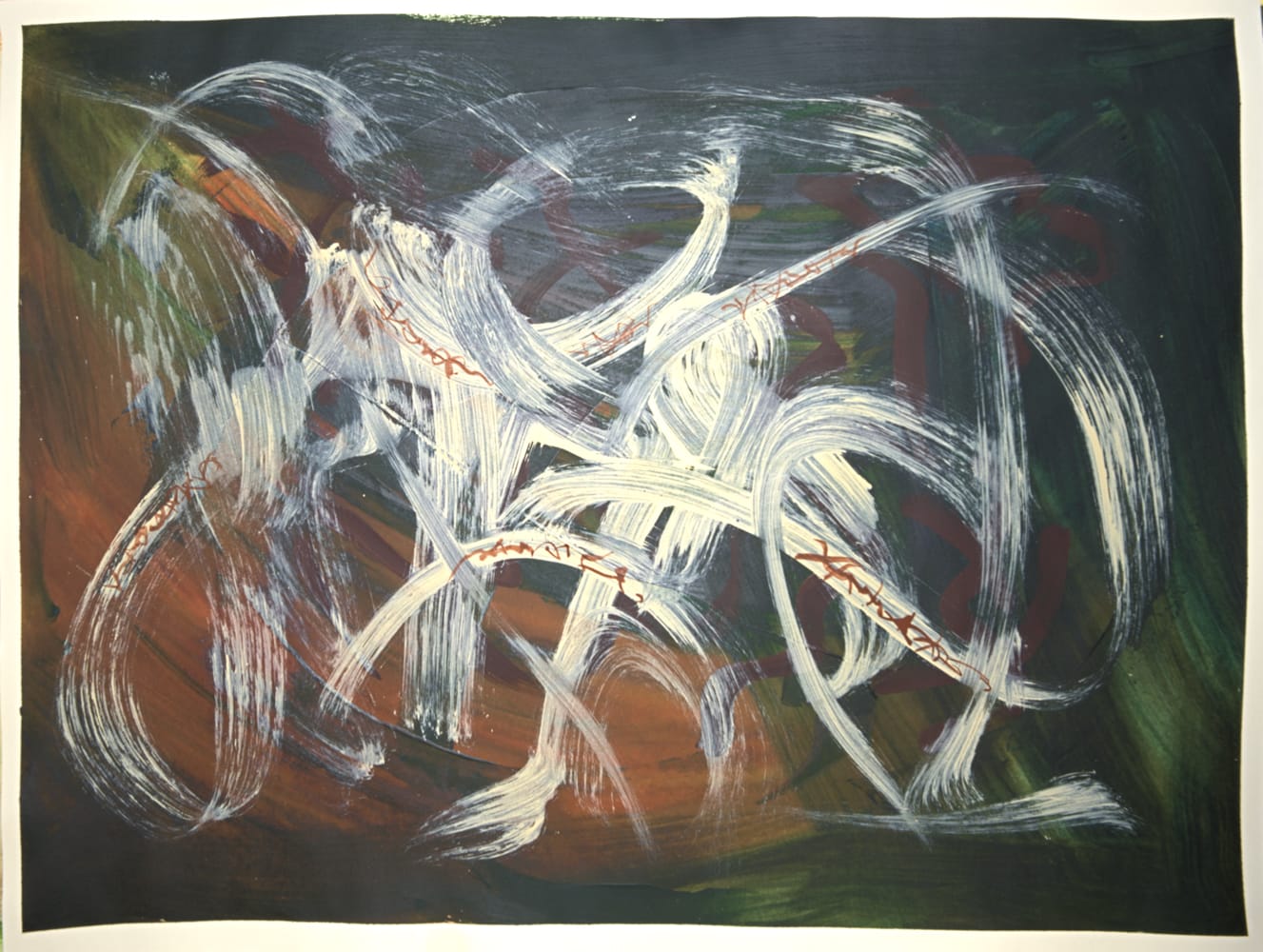
Artist’s statement
I’ve spent my life with a kind of work that won’t leave me alone—the work of making something that wasn’t there before. It began in small ways: light caught in stained glass, the careful labor of cooking, the steady eye of a camera. Each, in its time, was a gate to a larger field. But painting is where I finally felt the ground give way beneath me and open into something deeper.
There are moments that stay with a person. I remember the first print from my first real printer, the way an image that had lived only in the mind came into the world like a leaf unfolding. And I remember the first time a brush touched canvas and I knew I was stepping onto a road whose end I’d never see. Those moments changed the lay of my inner land. They told me creation is not a pastime but a path—one that keeps going as long as I do.
The questions that lead me on are simple, but not easily answered: What comes before we know a thing? What lies beyond what we can say? What is the shape of living when we strip it down to its first principles? I’ve found that art is the only way I can approach such questions, not head-on, but by circling them, like a man walking the borders of his property to see what’s grown there overnight.
Acrylic paint suits me because it keeps pace with a quickening thought—drying fast, changing fast, willing to be pushed, layered, revised. I start most often on plain watercolor paper, the way someone might sketch an idea in the dirt with a stick. When a notion holds up under that rough handling, I carry it over to canvas or board, where it can take on a more lasting shape.
I don’t plan much. I begin the way a farmer steps into a field before dawn, not knowing what the day will bring, only that he must meet it. The painting gathers itself while I’m working, and by the time I see what it’s becoming, it’s already leading me to the next one. Sometimes I chase an idea right down to the studio the instant it appears. Other times I loosen my thinking by scribbling charcoal on scrap paper or smearing paint without purpose, trusting that a little foolishness clears the way for something honest.
On the personal side, painting is how I look inward to understand the stranger I’ve been carrying around all these years. On the social side, my work is a response to the uneasy times we live in. We’ve lost many of the old landmarks—family patterns, community ties, the sense of a shared direction. People walk with less certainty now, and more burden. My paintings try to give form to that unsettled feeling so we can see it plain, the way a snowfall shows the shape of every hidden stone and furrow.
These days I’m especially taken with the moment before awareness—the first stirring before a thought or feeling has a name. I try to pare down complexity to something direct and manageable, the way Frost pared a whole philosophy down to stone walls, birches, and two roads parting in the woods. I paint nearly every day, not to arrive anywhere in particular, but because the work keeps unfolding. Each piece is simply a step further down the path, and the path, as far as I can tell, is the real thing I’m making.